How to Stop Biting Your Nails and Grow Them Out
You notice it halfway through a meeting, or on the couch during a show. One thumb is at your mouth, and the polish you put on Sunday has already lost its edge.
Up to 30 percent of people bite their nails, so you have plenty of company. Most people can quit with a plan that fits their triggers, and this guide gives you one. You’ll get six steps taken from dermatologist advice, a nail care routine for the regrowth months, and a timeline that shows what to expect each week.
Why You Bite Your Nails
Most nail biting starts in childhood, after about age three or four, and many children outgrow it. For everyone else, it turns into a coping habit. UCLA Health lists feeling nervous, bored, lonely or hungry as common starting points.
Three situations come up again and again: stress, boredom and deep focus. You might chew a thumbnail while you wait for an email, or work through all ten fingers while you solve a problem at your desk, with no memory of doing it. Healthline adds impatience and frustration to the list.
Family history plays a part too. In studies summarized in one medical review, between 36.8 and 63 percent of nail biters had a relative with the habit. Biting your nails doesn’t mean you have a disorder, and it isn’t a character flaw. A habit this automatic needs a plan, and willpower alone rarely covers it.
What Biting Does to Your Nails and Skin
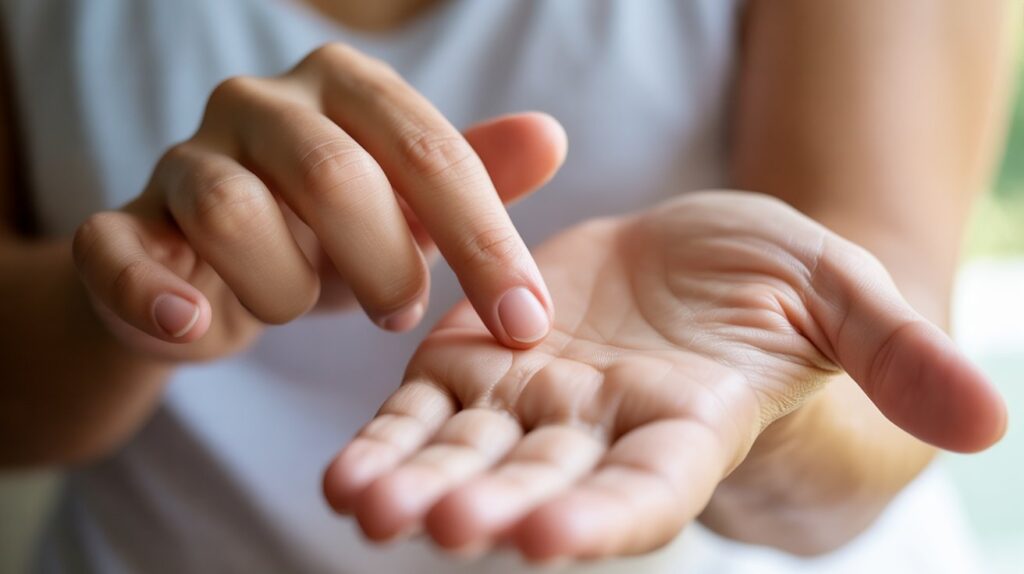
Repeated biting makes the skin around your nails sore. The American Academy of Dermatology warns it can also damage the tissue that makes nails grow, which leaves them looking abnormal.
Your mouth gets involved as well. Germs pass from your mouth to your fingers and back, and UCLA Health links the habit to skin and fungal infections, chipped or misaligned teeth, and jaw pain.
Long-term damage is rare, which is good news if you’ve bitten for years. Most nails recover once you stop.
Step 1: Find Your Triggers

Spend one week taking notes before you change anything else. Each time you catch your hand at your mouth, type three things into your phone: the time, where you are and how you feel.
The AAD says that knowing when you’re inclined to bite may help solve the problem on its own. Your notes will also show you which of the steps below to try first.
| Trigger | What It Looks Like | Try This |
|---|---|---|
| Stress | Before a deadline or a hard conversation | Keep a stress ball within reach |
| Boredom | Traffic, waiting rooms, TV | Give your hands a job, like a fidget toy |
| Deep focus | Reading, emails, problem solving | Cover your worst fingers with tape |
| Rough edges | A hangnail or snagged corner | Carry a small nail file |
Step 2: Trim Your Nails Every Week
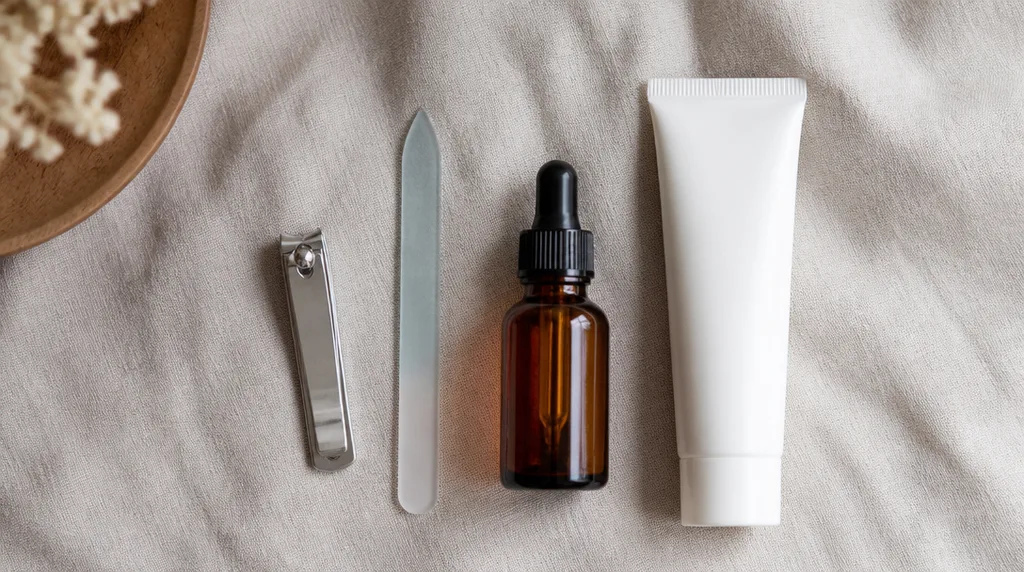
Less nail gives you less to bite. Pick one day a week, such as Sunday night, and make the trim a fixed appointment.
Clip each nail short, then smooth the edge with a file. Stick to one direction, because sawing back and forth can weaken the nail. Check for hangnails and ragged corners while you’re there, since those are what tempt your teeth.
Round or soft square shapes suit short nails best. They have no sharp corners to catch on a sweater, and a corner that catches is one your teeth will find.
You don’t need much to get started, and all of it fits in a makeup bag.
| Item | Rough Price | What It’s For |
|---|---|---|
| Nail clippers | $3 to $8 | Weekly trim |
| Glass or emery file | $2 to $10 | Smoothing rough edges |
| Bitter polish | $6 to $15 | Taste deterrent |
| Hand cream | $4 to $10 | Dry skin around the nail |
| Stress ball or fidget toy | $3 to $10 | Keeping your hands busy |
Step 3: Give Your Hands Something Else to Do
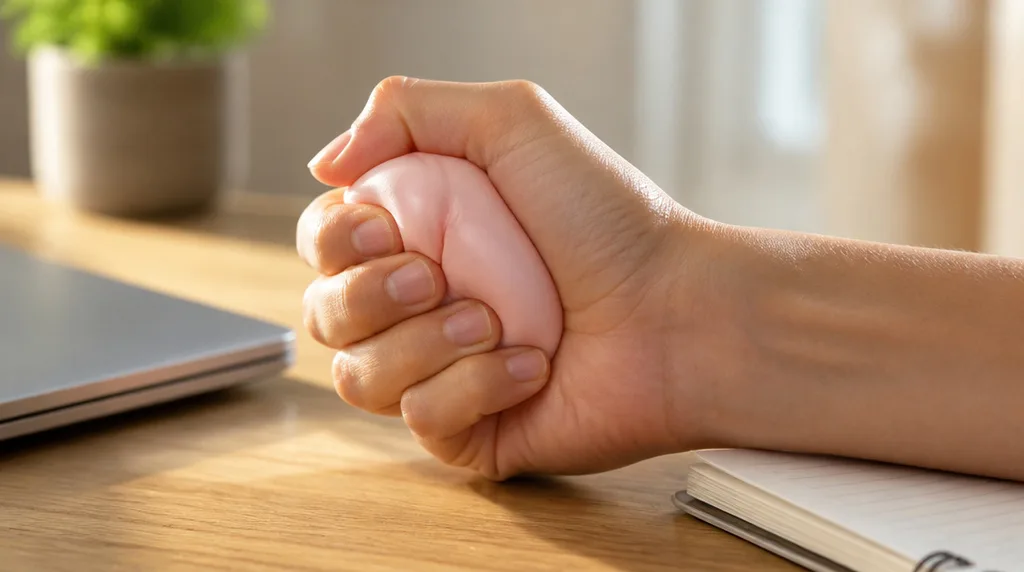
An urge needs somewhere to go, and a replacement habit gives it a place. The AAD suggests a stress ball or fidget toy. Keep one at your desk and one in your bag, so you can reach it before your hand reaches your mouth.
Chewing gum works for some people, though Healthline warns that too much can cause dental or jaw problems. Treat it as an occasional backup.
A trial published in JAMA Dermatology tested a gentler swap. People who bit their nails, pulled their hair or chewed their cheeks learned to stroke their fingertips, palm or forearm when the urge hit, and they practiced at least twice a day.
After six weeks, about half of them reported improvement, compared with about one in five people on a waitlist. The study had 268 participants and relied on their own ratings, so outside experts called for more research. It costs nothing to try, and you can do it in a meeting without anyone noticing.
Step 4: Quit One Finger at a Time
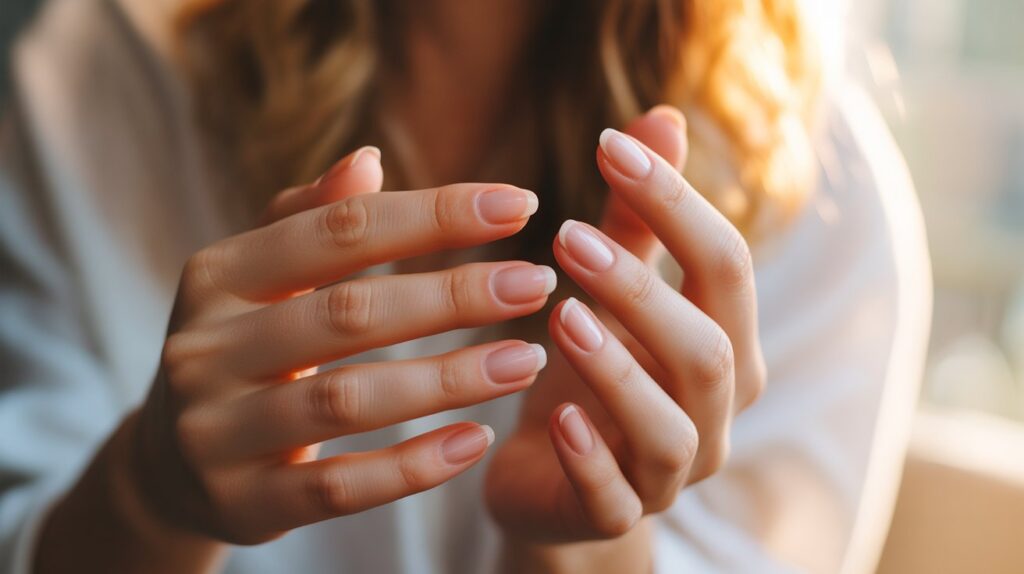
Protecting ten nails from day one sets a high bar. The AAD notes that some doctors recommend a gradual approach, starting with one set of nails, such as your thumbs. Once that holds, you add your pinkies, your pointer fingers or a whole hand.
One way to pace it across ten weeks:
- Weeks 1 and 2: both thumbs are off limits
- Weeks 3 and 4: add your pinkies
- Weeks 5 and 6: add your pointer fingers
- Weeks 7 and 8: add your ring fingers
- Weeks 9 and 10: protect every nail
Stay on a stage longer if you need to, and move on when you’ve gone a full week without touching those nails. You’ll see the protected ones growing while the others catch up, and that helps on harder days.
Step 5: Use Bitter Polish or a Barrier
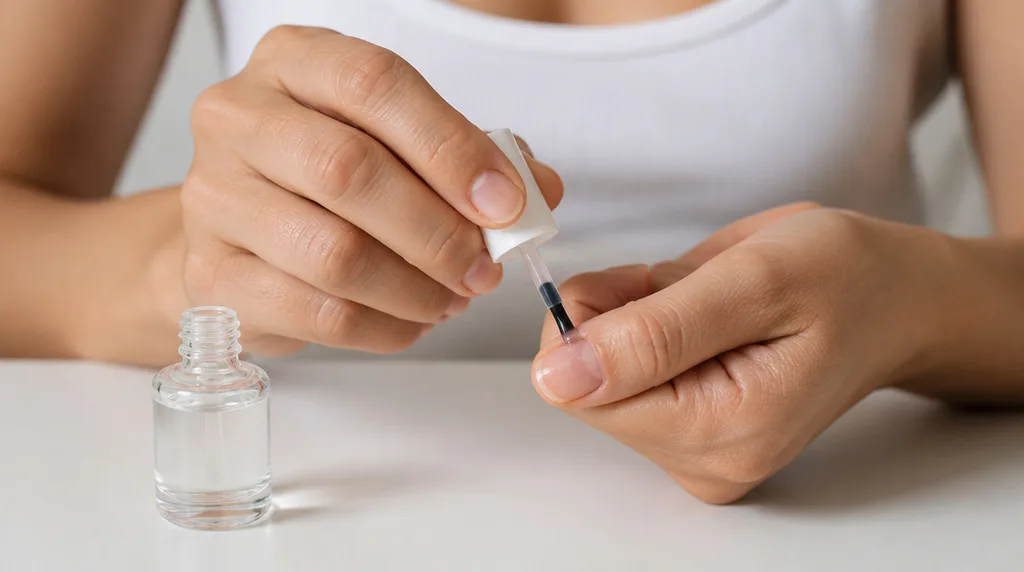
Bitter polish is the classic fix. You can find it wherever nail polish is sold, and the AAD describes it as safe but awful tasting. Brush on a thin coat as you would a clear top coat, let it dry and reapply as the label directs.
It won’t work for everyone, since some people get used to the taste. Pair it with the replacement habit from Step 3, so the urge has somewhere else to go.
Barriers stop you in the moment. Tape, stickers or bandages on your worst fingers act as a reminder, and gloves work during a long drive or a movie at home. UCLA Health also mentions retainer-style devices, which you’d get through a dentist or doctor.
Step 6: Paint Your Nails or Book a Manicure
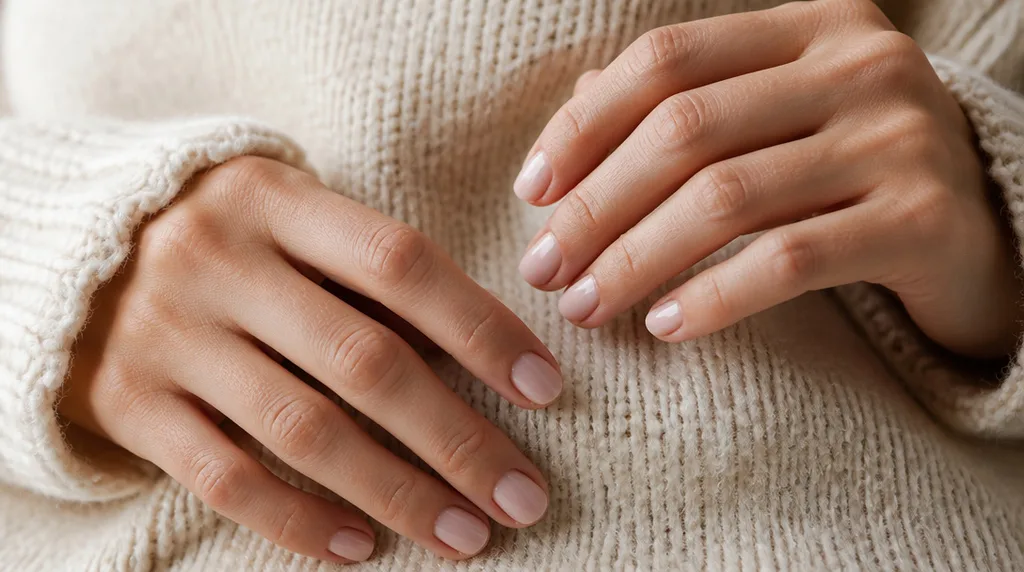
This step makes quitting more pleasant. The AAD points out that you’re less likely to bite nails that look nice, or nails you’ve paid to have done. A standing appointment helps too, because you know someone will see your nails soon.
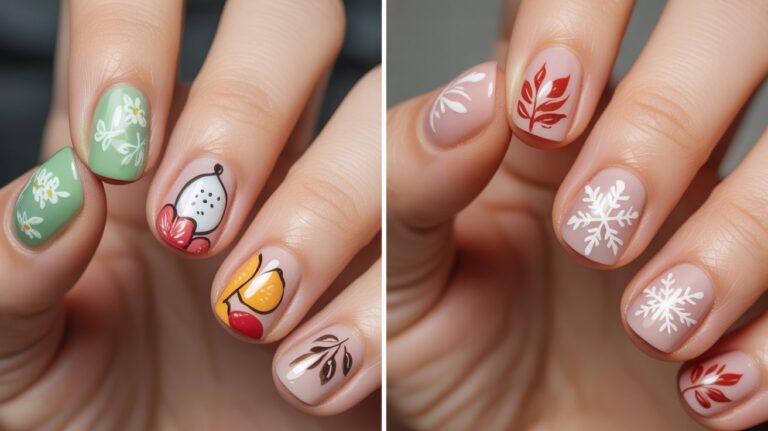
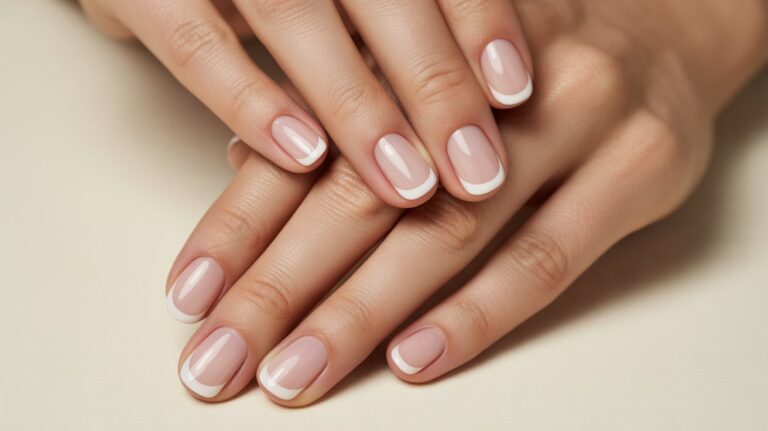
Choose colors that suit short nails while they grow. Sheer pink, milky white and soft nude all sit well on uneven lengths, and a French manicure you can do at home looks tidy on a short tip. Dark shades show every chip, so save those for later.
| Look | Finish | Good For |
|---|---|---|
| Sheer pink | Glossy, one or two thin coats | Everyday and office |
| Milky white | Soft and semi-opaque | Hiding uneven nail beds |
| Soft nude | Cream | Interviews and meetings |
| Clear top coat | High shine | The first weeks of regrowth |
| Short French tip | Thin white line | Weekends and events |
Salon prices add up, so a home routine fits a tighter budget. Mixing your own polish shades gets more out of a few bottles, and nail art with household items gives you something new to protect each week.
If you do book a salon, pick a licensed one that sterilizes its tools. Skip artificial nails as a way to hide damage, and keep polish off any broken skin.
Your First Week, Day by Day
Six steps can feel like a lot at once. This schedule spreads them out, and each task takes about ten minutes.
- Day 1: start your trigger notes and photograph your hands
- Day 2: buy your clippers, file and bitter polish
- Day 3: trim all ten nails and file the edges smooth
- Day 4: put a stress ball or fidget toy at your desk and another in your bag
- Day 5: paint both thumbs with bitter polish and pick your first protected nails
- Day 6: read through your notes and circle your two biggest triggers
- Day 7: paint your nails a sheer shade and set your weekly trim day
Keep the notes going after the first week. Your triggers may shift once your usual ones are covered, and a fresh pattern is easier to catch on paper.
How to Care for Your Nails While They Grow

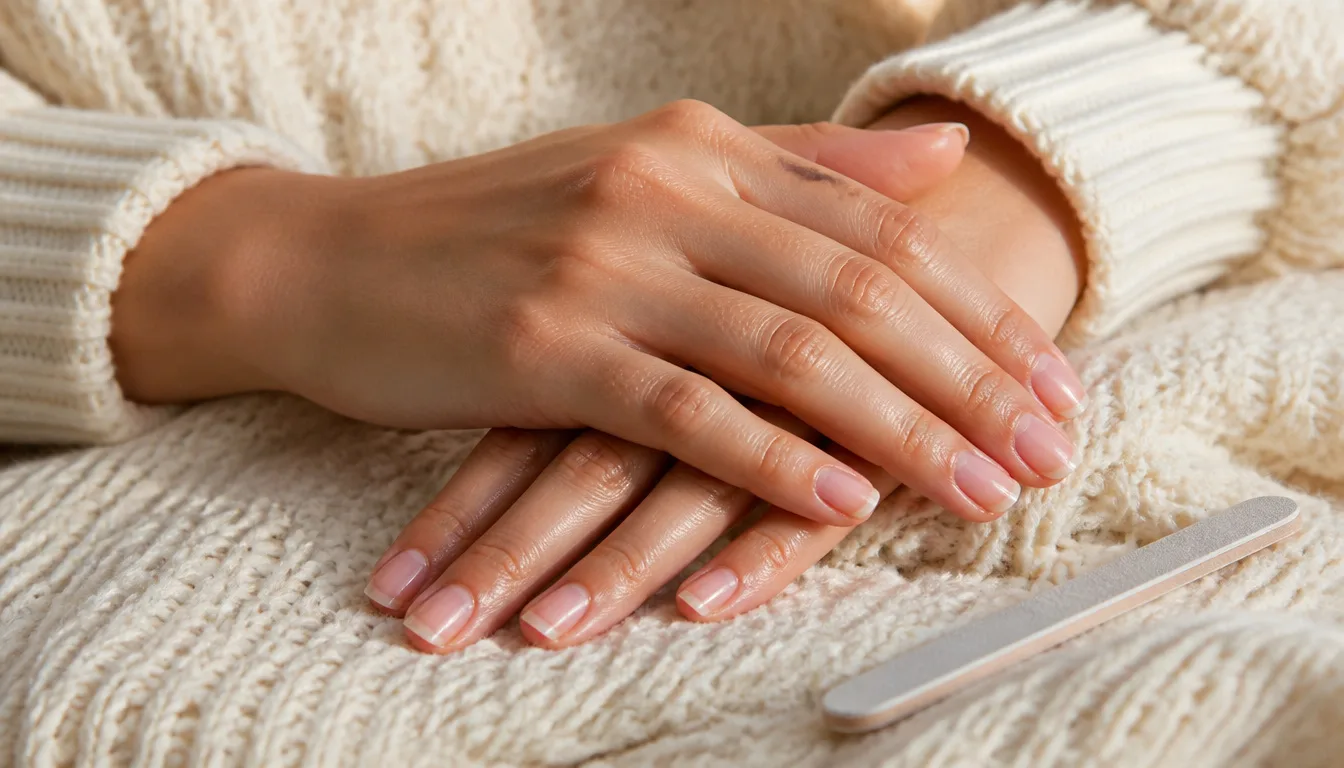
Bitten nails need gentle handling for a few months. A short routine keeps the skin calm and takes away the rough spots that pull you back in.
- Leave your cuticles alone. They protect the root of the nail, and cutting them can invite infection
- Rub hand cream into your nails and fingertips at night
- Wear rubber gloves for dishes and cleaning
- Trim hangnails with clean clippers instead of pulling them
- File any snag the moment you feel it
Moisturizer won’t make your nails grow faster, and dermatologists say there’s little evidence that it does. It does improve how your cuticles look, and it can help protect nails from breaking. Twenty seconds at bedtime is an easy habit to keep.
How Long Bitten Nails Take to Grow Back
Fingernails grow about 3.5 millimeters a month on average, or close to an eighth of an inch. Rates vary by person and by finger, so use these figures as a rough guide.
| Time Since You Stopped | New Growth | What You Can Do |
|---|---|---|
| 2 weeks | About 2 mm | Keep edges smooth and skin moisturized |
| 6 weeks | About 5 mm | File a soft shape and try sheer polish |
| 3 months | About 10 mm | Try darker shades if you like |
| 4 to 6 months | A full nail | Judge the final shape and length |
Take a photo of your hands every two weeks in the same light. Slow change is hard to see in the mirror, and those photos make good motivation on a rough day.
What to Do After a Slip
One bad afternoon doesn’t erase a month of progress. Write down what set it off, file the rough edge and carry on from the same stage. Expect a few slips during a hard week at work or a bad cold.
Cutting down counts as progress, Healthline notes, even if you don’t reach zero right away. The tracker at the end of this guide compares today’s count with your usual day, so you can follow the trend and stop grading yourself on one evening.
When to See a Doctor
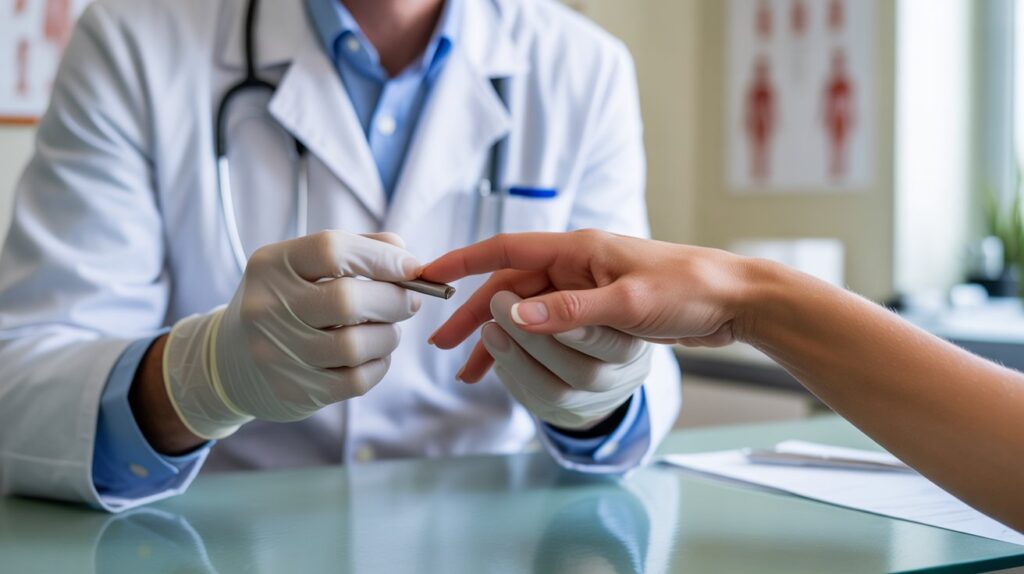
Minor nail biting rarely needs medical care. UCLA Health suggests seeing your provider if any of these keep coming back:
- Ingrown nails
- Nail discoloration
- Nails separating from the surrounding skin
- Skin or nail infections
- Swelling, pain or bleeding around your nails
Get help as well if you can’t stop after repeated tries, if not biting causes severe shame, anxiety or guilt, or if the habit limits your daily life. A sudden new habit is worth mentioning too, since it can be a side effect of medication.
Therapy can help. UCLA Health names cognitive behavioral therapy and acceptance and commitment therapy, sometimes combined with habit reversal training. Your primary care doctor can point you in the right direction, and a board-certified dermatologist can treat an infection.
Frequently Asked Questions
How long does it take to stop biting your nails?
No single timeline fits everyone. The finger-by-finger plan above runs ten weeks, and you may need longer. Judge your progress by your daily count, which should fall over the weeks.
Can you wear polish on bitten nails?
Yes, as long as the skin around the nail isn’t broken or sore. Choose a sheer shade while the nails are short, and file the edges even before you paint.
Does bitter polish work on everyone?
No. It discourages many people, and some get used to the taste. You’ll have better luck pairing it with a replacement habit.
Will my nails go back to normal?
They usually do, since long-term damage is rare. A full nail takes four to six months to grow out. Ask a dermatologist if a nail still looks abnormal after that.
Should I worry about my child biting their nails?
Many children outgrow it. Mention it to your pediatrician if the skin looks sore or infected, or if the habit seems tied to anxiety.
Start Tonight
File both thumbs smooth and paint them. Put a stress ball by the couch, then open your phone notes and write down the first time you reach for your mouth tomorrow.
Use the tracker below once a day for a quick read on how your count compares with your usual.