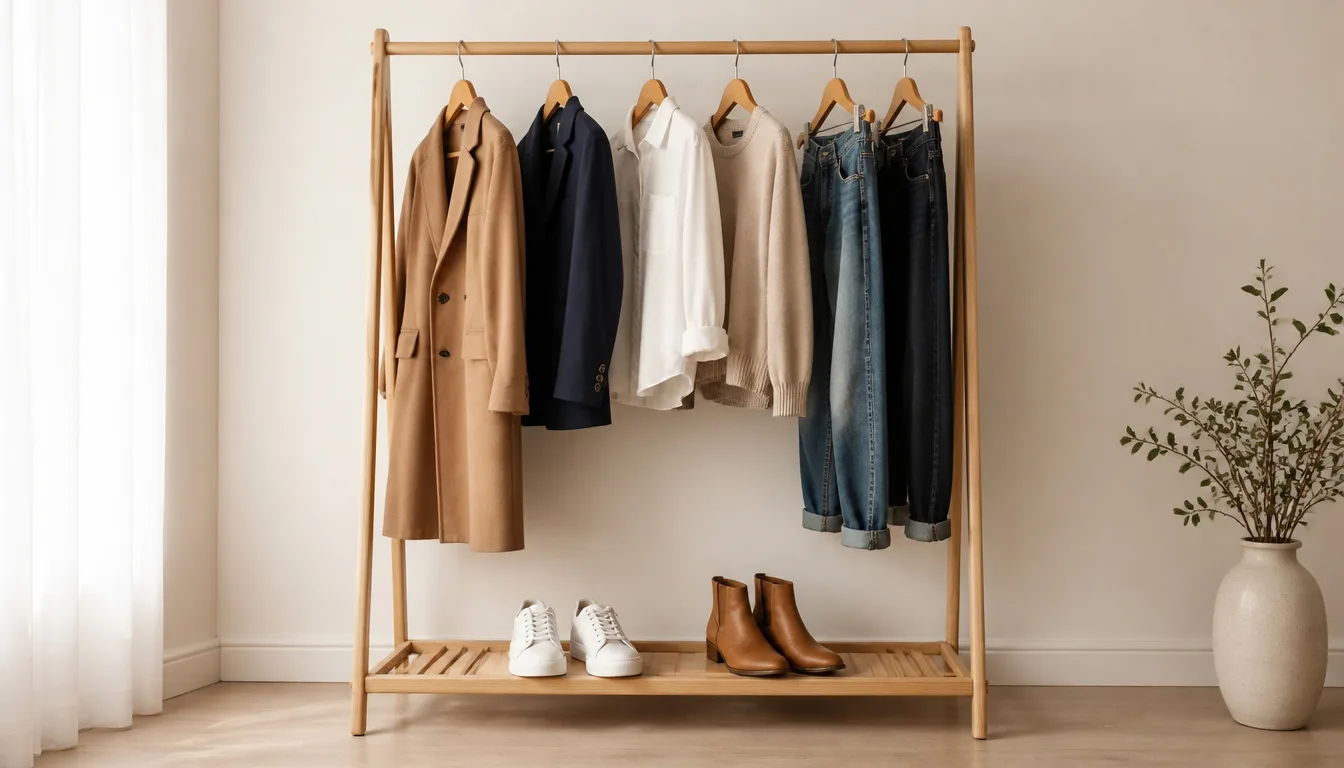
How to Build a Capsule Wardrobe on a Budget in 8 Steps
Most capsule wardrobe photos show $200 jeans and a $400 coat. That’s a poor guide if your whole clothing budget for the year is $400.
You can build a working capsule for far less, using what you own, thrift stores and sale timing. This guide shows you what to buy, when to buy it and how to spot quality, with three sample budgets to copy and a calculator to plan your own.
What Is a Capsule Wardrobe?

A capsule wardrobe is a small set of clothes that all work together, usually 25 to 40 pieces counting shoes and accessories. The phrase appeared in American publications as early as the 1940s. London shop owner Susie Faux revived it in the 1970s at her boutique, Wardrobe.
Designer Donna Karan took the idea mainstream with her Seven Easy Pieces collection in the 1980s. Her seven were a bodysuit, a skirt, a tailored jacket, a dress, something leather, a white shirt and a cashmere sweater, all meant to carry a woman from office to party.
A tight budget suits this approach, because every purchase has to earn its place. The average US household spends about $2,000 a year on apparel and services, and the $1,000 plan below costs half of that.

Is a Capsule Right for You?
You’ll spend less time choosing clothes, buy fewer things you never wear and pack faster for trips. Fewer purchases also mean less waste. EPA figures show 11.3 million tons of textiles went to US landfills in the most recent year it reported.
There are trade-offs. You’ll do laundry more often with fewer clothes, and you’ll repeat outfits in front of the same people. A capsule can also feel too tight if your job, your climate or your size changes a lot through the year.
Treat the number as a guide. If 45 pieces is what your life needs, 45 is your capsule.
How Much a Capsule Costs
Your budget decides how long the build takes and where you shop. These ranges are rough planning figures, and piece counts include what you already own.
| Starter | Moderate | Comfortable | |
|---|---|---|---|
| Total spend | $200 to $400 | $500 to $800 | $1,000 to $1,500 |
| Timeline | 6 to 12 months | 3 to 6 months | 1 to 3 months |
| Main sources | Thrift, sales, swaps | Mix of new and used | New, with a few premium pieces |
| Total pieces | 25 to 30 | 30 to 35 | 35 to 40 |
You don’t need to buy everything at once. Rushing usually leads to pieces you regret.
Step 1: Audit Your Current Wardrobe

Before you spend a dollar, find out what you own. Pull everything out onto the bed and make three piles.
- Keep: pieces you wear often that fit well and suit your life
- Maybe: clothes that need a repair, or ones you like but rarely reach for
- Sell or donate: anything that doesn’t fit or no longer feels like you
Try on the Maybe pile with shoes on, in daylight. Anything you still feel unsure about goes in a bag at the back of the closet for three months. If you never go looking for it, let it go.
Turn Your Sell Pile Into Budget
Take clear photos on a plain background and list your best pieces on Poshmark, eBay or Facebook Marketplace. ThredUp takes less effort, though it tends to pay less, and consignment shops give you cash at lower prices.
Resale prices run well below what you paid, so expect a small return. Even $50 covers a thrifted blazer and a pair of jeans.
Step 2: Define Your Style and Lifestyle
Copying someone else’s list is the fastest way to waste money. A remote worker needs different clothes from a teacher or a nurse, so start with how your week looks.
Write down what you do on most days, the weather you dress for and the outfits that make you feel like yourself. Then note the shapes you reach for, such as a straight-leg jean, a wrap dress or an oversized knit.
Sample Capsules by Lifestyle
| Your Week | Lean Toward | Spend Less On |
|---|---|---|
| Office | Blazers, trousers, button-downs, loafers | Casual tees and shorts |
| Work from home | Soft knits, good jeans, clean sneakers | Formal shoes and blouses |
| On your feet all day | Stretch pants, supportive shoes, layers | Delicate fabrics |
| Busy with kids | Washable fabrics, dark colors, flat shoes | Dry-clean-only pieces |
Choose a Color Palette
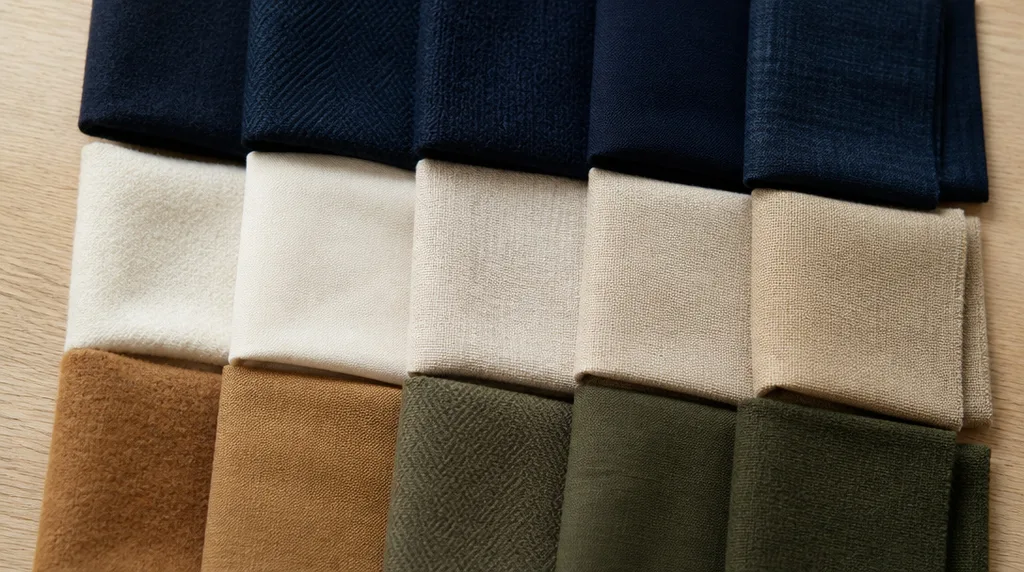
Pick three or four neutrals plus one or two accent colors. When everything matches, you need fewer pieces to make the same number of outfits.
| Base | Second Neutral | Accent 1 | Accent 2 | Good For |
|---|---|---|---|---|
| Black | Gray | White | Burgundy | Easy secondhand finds |
| Navy | Cream | Camel | Olive | Office and weekend |
| Brown | Beige | Rust | Denim | Vintage shopping |
| Charcoal | White | Navy | Rose | Workwear |
Hold a shade up to your face in daylight before you commit. If black drains your color, swap in navy or charcoal. If bright white feels harsh, try cream.
Step 3: Know What to Buy

Use this list as a starting point and cut anything your life doesn’t need. It adds up to about 30 to 40 pieces.
| Category | How Many | What to Include |
|---|---|---|
| Tops | 10 to 12 | 3 tees, 2 long-sleeve tops, 2 button-downs, 2 sweaters, 1 or 2 nicer blouses, 1 cardigan |
| Bottoms | 6 to 8 | 2 pairs of jeans in dark and medium wash, black pants, casual pants, 1 or 2 skirts, shorts |
| Dresses | 1 or 2 | One you can wear up or down, plus a seasonal dress if you’ll use it |
| Outerwear | 3 or 4 | A denim or utility jacket, a warm coat, a rain jacket or trench, a blazer |
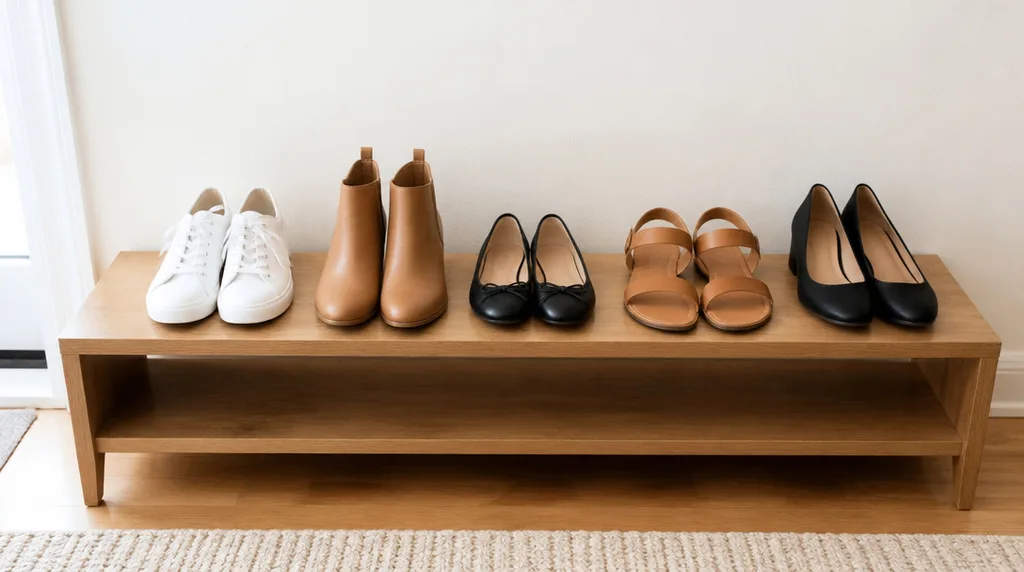
| Shoes | 5 or 6 | White sneakers, ankle boots, flats, sandals, a dressier pair, athletic shoes |
| Accessories | 5 to 8 | A tote, a crossbody bag, 2 or 3 belts, scarves, simple jewelry |
How to Split Your Money
Put 40 to 50 percent of your budget into shoes, outerwear and one pair of jeans that fits well, because you’ll wear them most. Give 30 to 40 percent to pants, skirts and sweaters. Tees, tanks and simple accessories can share the rest.
Shoes deserve the extra money because cheap soles wear out fast and you feel it by the end of the day. A plain tee is the opposite. It’s hard to tell a $10 one from a $40 one across a room.
Step 4: Shop Smart
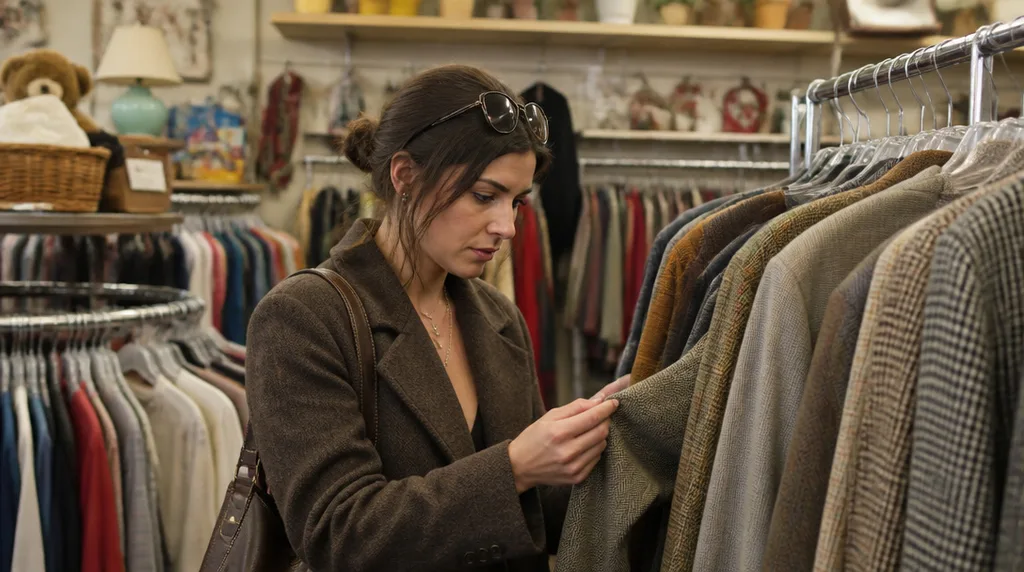
Thrift the Right Things
Secondhand stores suit sturdy pieces that age well. Look for denim, wool coats, blazers, leather belts and bags, and cashmere sweaters, since those hold up to years of wear.
Pass on shoes with worn-down soles, stretched basics and anything stained. Try stores in wealthier neighborhoods if you can, since donations there often include better labels. Weekday mornings tend to be quieter, which gives you time to check each rack.
Bring a tape measure and your favorite jeans’ waist and inseam, because sizes vary so much between brands and decades. Wear a slim layer too, so you can try jackets on in the aisle if the fitting room has a line.
Use the Right Apps and Stores
| Where | Best For | Tip |
|---|---|---|
| ThredUp | Quick browsing | Filter by size, color and brand |
| Poshmark | Name brands | Send an offer below the listing price |
| eBay | Vintage and specific brands | Save searches and watch items |
| Depop and Vinted | One-off pieces | Ask the seller for measurements |
| Nordstrom Rack | Designer for less | Start with the clearance section |
| Target, H&M, Uniqlo | New basics | Stick to tees, tanks and layers |
Shop the Sale Calendar
Retailers clear each season’s stock as the next one arrives, so the rule is simple. Buy for the season that’s ending.
| Month | What to Look For |
|---|---|
| January | Winter clearance on coats, sweaters and boots |
| February | Presidents Day sales |
| April | Spring clearance |
| May | Memorial Day sales |
| July and August | Summer clearance on sandals, shorts and swimwear |
| September | Back-to-school and Labor Day sales |
| November | Black Friday, with your list in hand |
| Late December | After-Christmas clearance |
A $150 winter coat can drop to a fraction of that by late January, and sandals go the same way by September. Sign up for store emails with a separate address, so the discounts reach you without tempting you every day.
Step 5: Check Quality in 60 Seconds
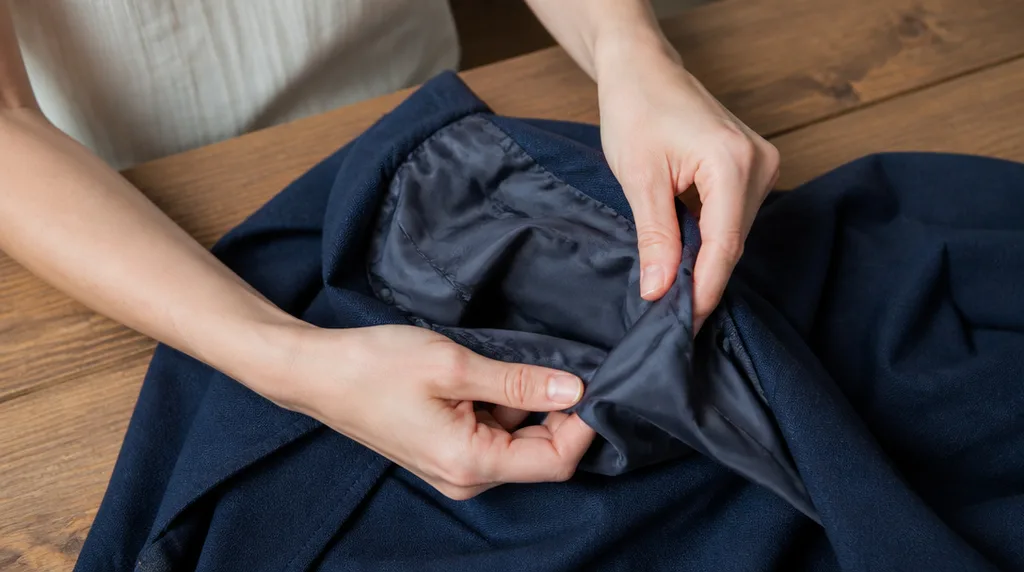
Cheap and well made can go together, and you can learn to spot it on the rack. Run through these quick checks before you pay.
| Item | What to Check |
|---|---|
| Tops and dresses | Hold the fabric to the light, look for straight seams and an even hem, and stretch it to see if it springs back |
| Jeans and pants | Look for a flat, reinforced inseam and a solid zipper, and feel the weight of the denim |
| Shoes | Bend the sole so it flexes at the ball of the foot, and check for even stitching around the upper |
| Outerwear | Tug the lining gently, run the zipper twice and check that buttons are sewn on tight |
Fabrics on a Budget
Natural fibers aren’t always the better buy. A cotton and polyester blend resists wrinkles and holds up in the wash. Tencel drapes well and feels soft, and a good acrylic knit stays warm for much less than wool.
Skip polyester that feels like plastic, acrylic that’s already pilling on the hanger, and rayon that creases when you squeeze it. Check the care label as well, because a $15 thrifted jacket that needs dry cleaning can cost more over a year than a $40 one you can wash at home.
Step 6: Pick Your Budget Plan
These plans assume you already own a few basics that fit, so the prices cover new additions only. Costs reflect thrift and sale prices, and yours will vary by city.
The $300 Starter Capsule (12 Months, About 15 New Pieces)
| Months | What to Buy | Spend |
|---|---|---|
| 1 to 2 | 2 basic tees ($20), thrifted jeans ($15), thrifted cardigan ($15) | $50 |
| 3 to 4 | Button-down shirt ($15), black pants ($25), white sneakers on sale ($20) | $60 |
| 5 to 6 | Thrifted blazer ($20), 2 long-sleeve tops ($30), sweater ($20) | $70 |
| 7 to 8 | Ankle boots ($35), crossbody bag ($15) | $50 |
| 9 to 12 | Dress ($25), clearance coat ($35), accessories ($10) | $70 |
The $600 Balanced Capsule (6 Months, About 19 New Pieces)
| Months | What to Buy | Spend |
|---|---|---|
| 1 to 2 | 3 basic tees ($45), 2 pairs of jeans ($80), 2 button-downs ($40), thrifted cardigan ($15) | $180 |
| 3 to 4 | 2 pairs of pants or skirts ($80), 2 sweaters ($60), thrifted blazer ($60) | $200 |
| 5 to 6 | 3 pairs of shoes ($130), sale coat ($60), 2 bags and accessories ($30) | $220 |
The $1,000 Quality Capsule (3 Months, About 20 New Pieces)
| Month | What to Buy | Spend |
|---|---|---|
| 1 | 4 quality basics ($120), 2 pairs of premium denim ($120), 2 button-downs ($60), 1 sweater ($50) | $350 |
| 2 | 2 pairs of pants ($100), 2 sweaters ($100), blazer ($90), dress ($60) | $350 |
| 3 | 3 pairs of shoes ($180), coat ($80), bags and accessories ($40) | $300 |
Step 7: Use Outfit Formulas
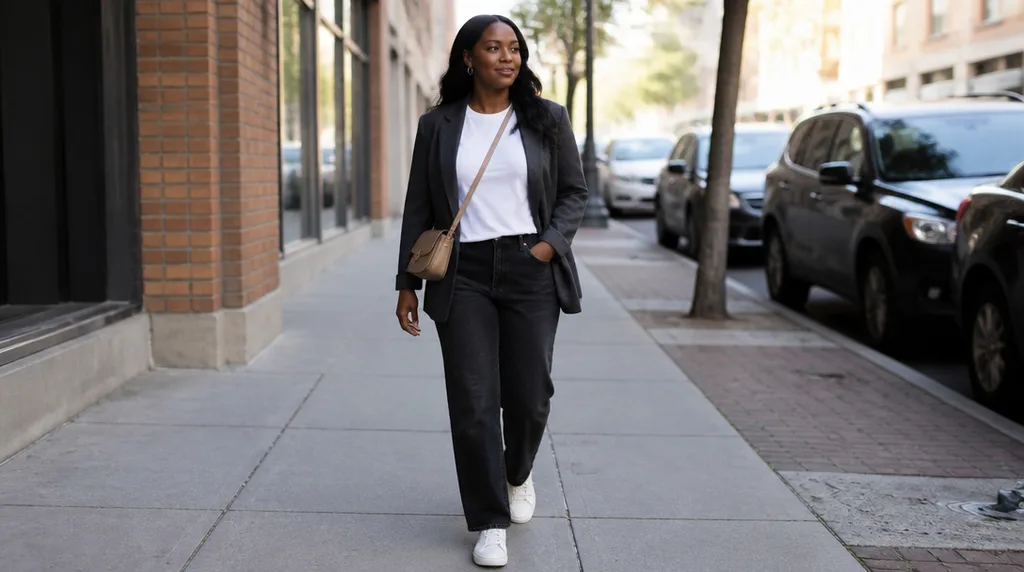
Ten tops and six bottoms give you 60 pairings on paper. Add three layers and the count climbs past 100, even after you throw out the ones that clash.
Formulas save you from starting over each morning. For more ways to make these pieces look polished, see these styling tricks for fast fashion.
A Week of Outfits From 12 Pieces
This week uses a white tee, a striped tee, a button-down, a sweater, dark jeans, black pants, a midi skirt, a blazer, a denim jacket, white sneakers, ankle boots and loafers.
| Day | Outfit |
|---|---|
| Monday | Button-down, black pants, blazer and loafers |
| Tuesday | Sweater, dark jeans and ankle boots |
| Wednesday | White tee, midi skirt, denim jacket and white sneakers |
| Thursday | Striped tee, black pants, blazer and white sneakers |
| Friday | Button-down, dark jeans and ankle boots |
| Saturday | Striped tee, dark jeans, denim jacket and white sneakers |
| Sunday | Sweater, midi skirt and ankle boots |
Take a photo of each outfit you like and keep them in a phone album, so you can repeat a saved look on a busy morning. If your office has a dress code, this work wardrobe guide and these business casual outfits add more options.
Step 8: Make Your Clothes Last

Care Tools Under $50
| Tool | Rough Price | What It Does |
|---|---|---|
| Fabric shaver | $12 to $15 | Removes pilling from knits |
| Shoe trees | $15 to $25 | Holds the shape of leather shoes |
| Handheld steamer | $20 to $30 | Takes out creases without an iron |
| Stain pen | $5 | Treats spills right away |
| Mesh laundry bags | $8 | Protects delicates in the wash |
Track Cost Per Wear
Divide the price by the number of times you wear something. A $200 coat worn 100 times costs $2 per wear, while a $30 dress worn three times costs $10.
Aim for under $1 on everyday pieces and under $5 on special occasion ones. A $12 thrifted blazer worn 50 times comes to 24 cents.
Repair or Replace?
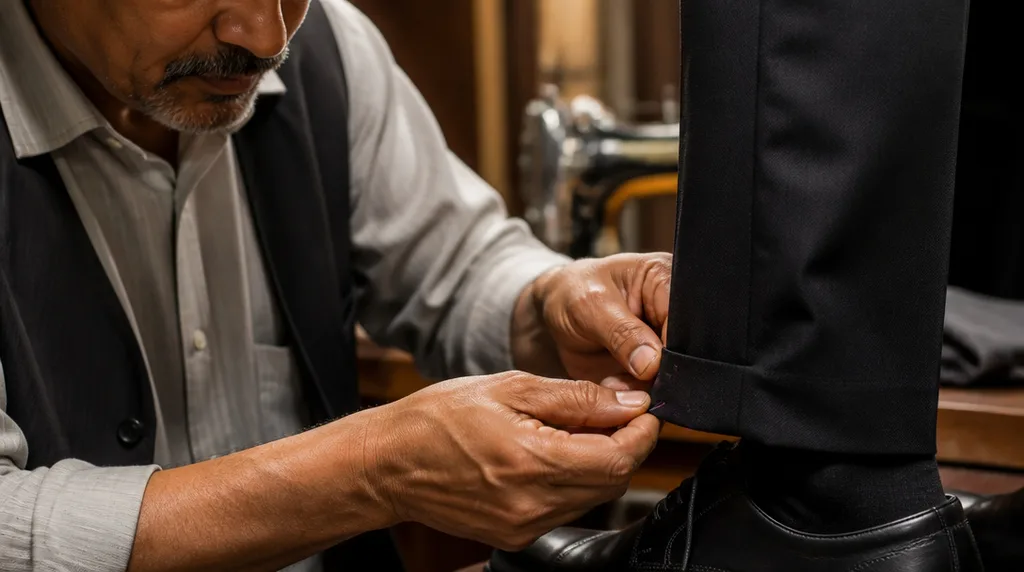
A good rule of thumb is to repair a piece if you love the fit and the fix costs under about 30 percent of a replacement. Prices vary by city, but a basic pant hem runs about $15 to $30 and a new pants zipper $20 to $65. Shortening blazer sleeves can cost far more, especially on a lined jacket, so get a quote before you buy a thrifted one that’s too long.
Replace a piece if the fabric has worn thin, several things need fixing, or it no longer suits your life.
Common Capsule Mistakes
Buying Everything at Once
Build slowly, so you can test how each piece works with the last one. A monthly limit helps.
Choosing Trends Over Staples
Keep trend pieces to about 10 to 15 percent of your closet, so a color that fades from fashion doesn’t leave you short of outfits.
Ignoring Fit
A $15 thrifted blazer that fits beats a $100 sale blazer that’s too big. Check the shoulders first, since those are the hardest and most expensive part to alter.
Forgetting How You Live
If you work from home, you don’t need five blouses. If you run every morning, your workout clothes deserve a small capsule of their own.
Skipping the Trial Run
Wear new pieces around the house with the tags on and check how they move. Return anything that pinches or rides up.
Seasonal and Special Occasion Add-Ons
Skip the four separate capsules. Keep 20 to 25 pieces all year and swap in five to ten seasonal items, such as sandals and sundresses in summer or boots and chunky knits in winter. A pair of white jeans can carry through the year if you plan the layers, and a jean jacket covers three seasons on its own.
Store three to five dressy pieces apart from your capsule, like one formal dress, dressy shoes and a clutch. They don’t need to mix with everything else.
Your First Four Weeks
- Week 1: sort your closet, list your sell pile and choose your palette
- Week 2: write your capsule list, set a budget and rank your must-buys
- Week 3: start with your top item, and check resale sites before you pay full price
- Week 4 onward: buy two to four pieces a month and test each with what you own
Frequently Asked Questions
Can I build a capsule wardrobe for under $500?
Yes, if you start with clothes you already own. Combine those with thrift finds and sale timing, and $300 to $500 can get you there. It takes more patience than spending $1,500 in one go.
How long does it take?
Plan on three to twelve months, depending on your budget. A $300 build spread over a year gives you time to wait for the right finds.
Should I get rid of everything and start over?
No, that’s an expensive mistake. Build around the pieces you already wear and only clear out what you know you won’t.
What if my size changes?
Buy for the body you have now. Stretch fabrics, elastic waists and flowing shapes give you room, and you can replace pieces as your size settles.
How do I handle a work dress code?
Spend on work clothes first, since you wear them most. Thrift stores often stock office pieces in very good condition.
What about workout clothes?
If you exercise often, keep five to eight workout pieces as a separate mini capsule so they don’t crowd your main list.
How do I keep outfits from feeling repetitive?
Change the accessories. Scarves, belts, bags and jewelry cost little at thrift stores and shift the look of a basic outfit.
Start With One Pile
Pull everything out this weekend and sort it into your three piles. Then run your numbers through the calculator below, which turns your budget and timeline into a monthly spending target.
💰 Capsule Wardrobe Budget Calculator
Plan your capsule wardrobe based on your budget, lifestyle, and timeline
Your Custom Capsule Wardrobe Plan
Budget Breakdown by Category
Shopping Timeline
Progress Over 3 Months
Recommended pace: Purchase 8-9 items per month
Budget-Saving Tips for Your Profile